Fort Gibson Lake Fishing in Late Fall: A Seasonal Guide

Late Fall Bites Await
Fish Fort Gibson Lake with a local guide this November.

Published:
Updated:
Late November changes how a lake fishes. Mornings get colder, the sun sits lower, and the pattern you followed in September stops working for a lot of anglers. Fort Gibson Lake in Oklahoma is a good example of a place where a little planning before the trip makes a real difference on the water.
This guide walks through how to think about a late-fall outing on Fort Gibson Lake, which of the lake's common catches are worth targeting, and where a guide's local knowledge earns its keep. Nothing here is a promise of numbers or size. Fishing does not work that way, and conditions on any given morning decide a lot.
Start With the Right Mindset for Late Fall
The first thing to settle is what you want out of the day. Late fall rewards anglers who stay flexible. A plan that is locked to one species or one spot tends to fall apart when the weather turns or the bite goes quiet.
Treat the first hour as information gathering. Watch where the boat is working, what the guide is checking, and how the fish respond. Then adjust. Anglers who treat the day as a series of small decisions usually have a better trip than those who expect the same pattern all day.
Dress is part of the plan too. Cold hands and a wet wind will end a good day early. Here is a simple checklist worth sorting out before you leave the house:
- Layers you can add or shed as the sun comes up
- A windproof outer shell, since open water feels colder than the air temperature suggests
- Gloves that still let you handle a rod and tie a knot
- A hat and sunglasses, because low-angle sun on the water is bright
- Water and food, so you are not cutting the day short for hunger
Which Catches to Think About
Fort Gibson Lake holds a wide mix of fish. For a late-November trip, the ones that come up most naturally are Crappie, White Bass, Striped Bass, and Catfish. Each calls for a slightly different mindset, so it helps to know what draws anglers to each one.
Crappie are a favorite for first-timers and seasoned anglers alike. They are often found around brush piles, and working a bait close to that cover is a common approach on this lake. It is relaxed, hands-on fishing that suits families and beginners as much as experienced hands.
Striped Bass are the draw for anglers who want a bigger fish on the line. On Fort Gibson Lake, trolling deep for Striper is one of the ways it gets done. If you have your heart set on a trophy-class fish, say so when you book, and be realistic that no one can guarantee one.
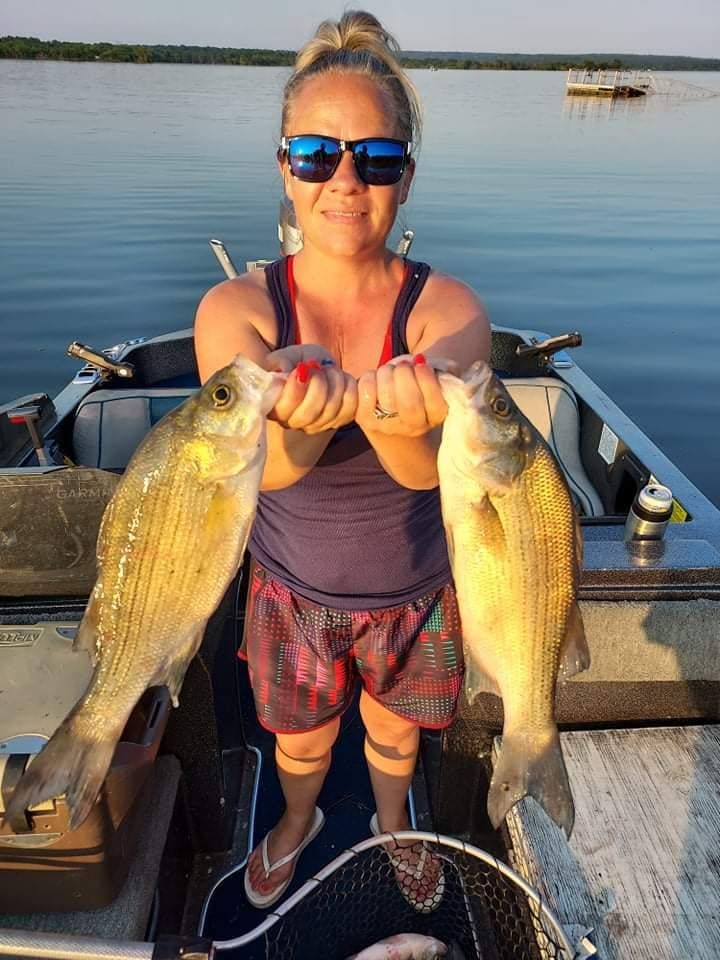
White Bass and Catfish round out the list. White Bass bring plenty of action when you find them, and Catfish give you a steady, patient style of fishing. A day built around several of these species keeps things interesting if one goes quiet. That variety is part of why the lake works well for a mixed trip.
Why a Guide Helps When Conditions Change
Late fall is when conditions swing the most. A warm, calm day can fish very differently from a cold, windy one, and a front moving through can change the whole picture overnight. A guide who spends time on Fort Gibson Lake sees those shifts and knows how to respond.
That local knowledge shows up in small ways. It might be choosing which part of the lake to start in, deciding when to move, or switching from one technique to another when the first one is not producing. Dustin Deckard of DnA's Guide Service runs trips on Fort Gibson Lake, and the lake's year-round fishing means he has to read changing conditions as a normal part of the job. For you, that means less time guessing and more time fishing.
It also matters if you are newer to the sport. A guide can show you how to handle the gear, set a hook, and work a bait properly. Those basics make a bigger difference than most people expect, and they carry over to every trip you take afterward.
Matching Your Trip to What You Want
Not every angler wants the same thing from a day on the water. Some want to learn, some want action, and some want to try a few different styles in one outing. Thinking about that ahead of time helps you pick the right kind of trip.
If you are building skills, a trip focused on the basics while trying for Crappie, White Bass, and Catfish is a natural fit. DnA's Guide Service offers a river trip along those lines, called Learn the Basics While Trying for Crappie, White Bass & Catfish. If you would rather shift tactics through the day, there is also Shift Tactics for Seasonal Bites, from Paddlefish Snagging to Precise Casting. Check the trip details to see which one matches your goals and the time of year you plan to go.
Getting the Most Out of the Day
A few habits make any late-fall trip better. Arrive ready and on time so you are not rushing the start of the day. Ask questions as you go, because a guide is usually glad to explain why they are fishing a certain way. And keep your expectations honest: some outings are hot and some are slow, and the difference often comes down to weather you cannot control.
Pay attention to what is working, and be willing to change. If the guide suggests a different approach, give it a fair try before deciding it is not for you. The anglers who tend to enjoy these trips most are the ones who stay curious and keep fishing.
Late November on Fort Gibson Lake can be a good time to be on the water. With the right preparation, a clear idea of what you want to target, and a guide who knows the lake, you give yourself the best chance at a day worth remembering.